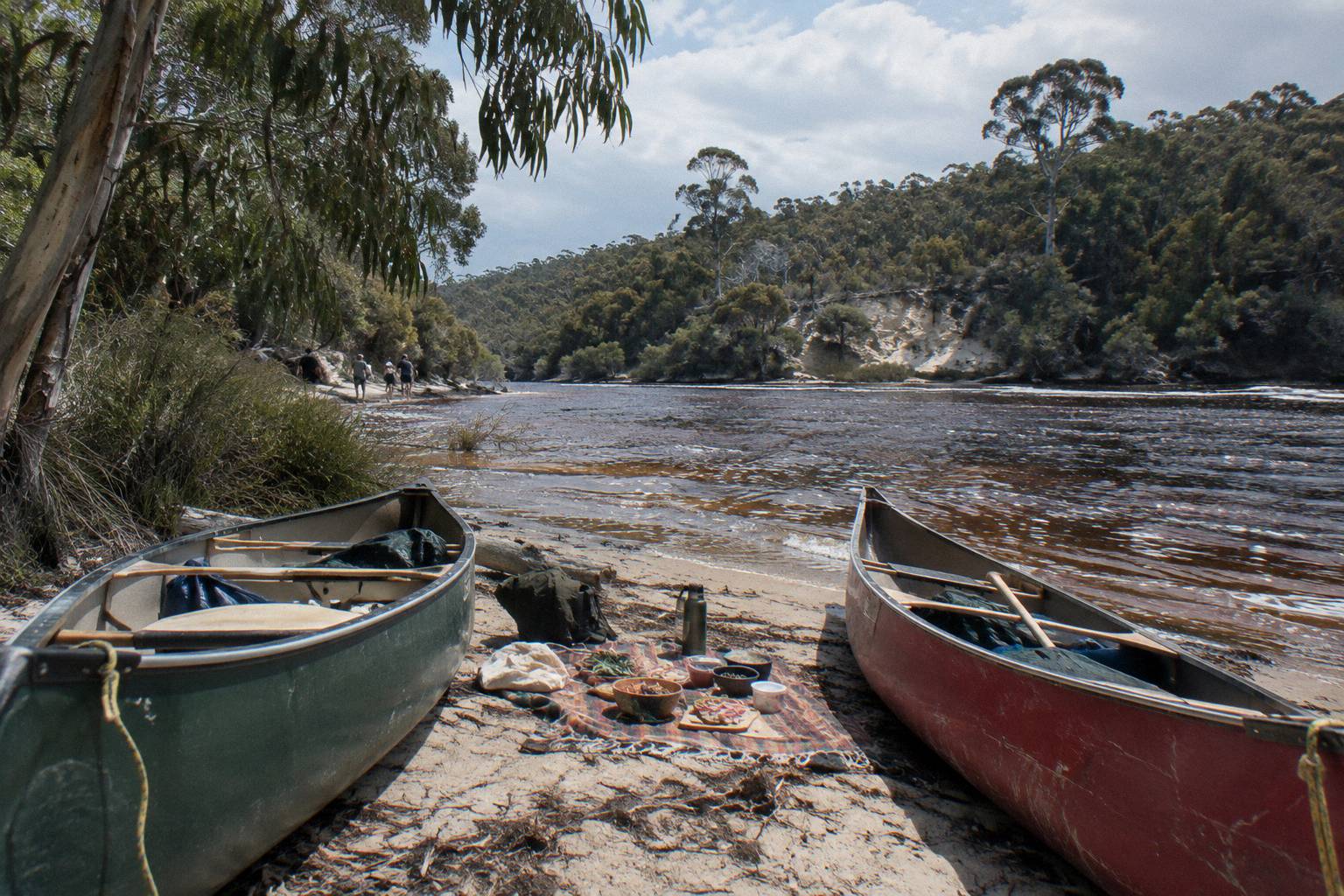
Wadandi Bush Food And The River Paddle: What Culture Adds To The Day
The river the canoes paddle has a Wadandi name, a 48,000-year human story and a lunch built on native tastings. Here is what is actually said, by whom, and what it adds to the day.
Short answer
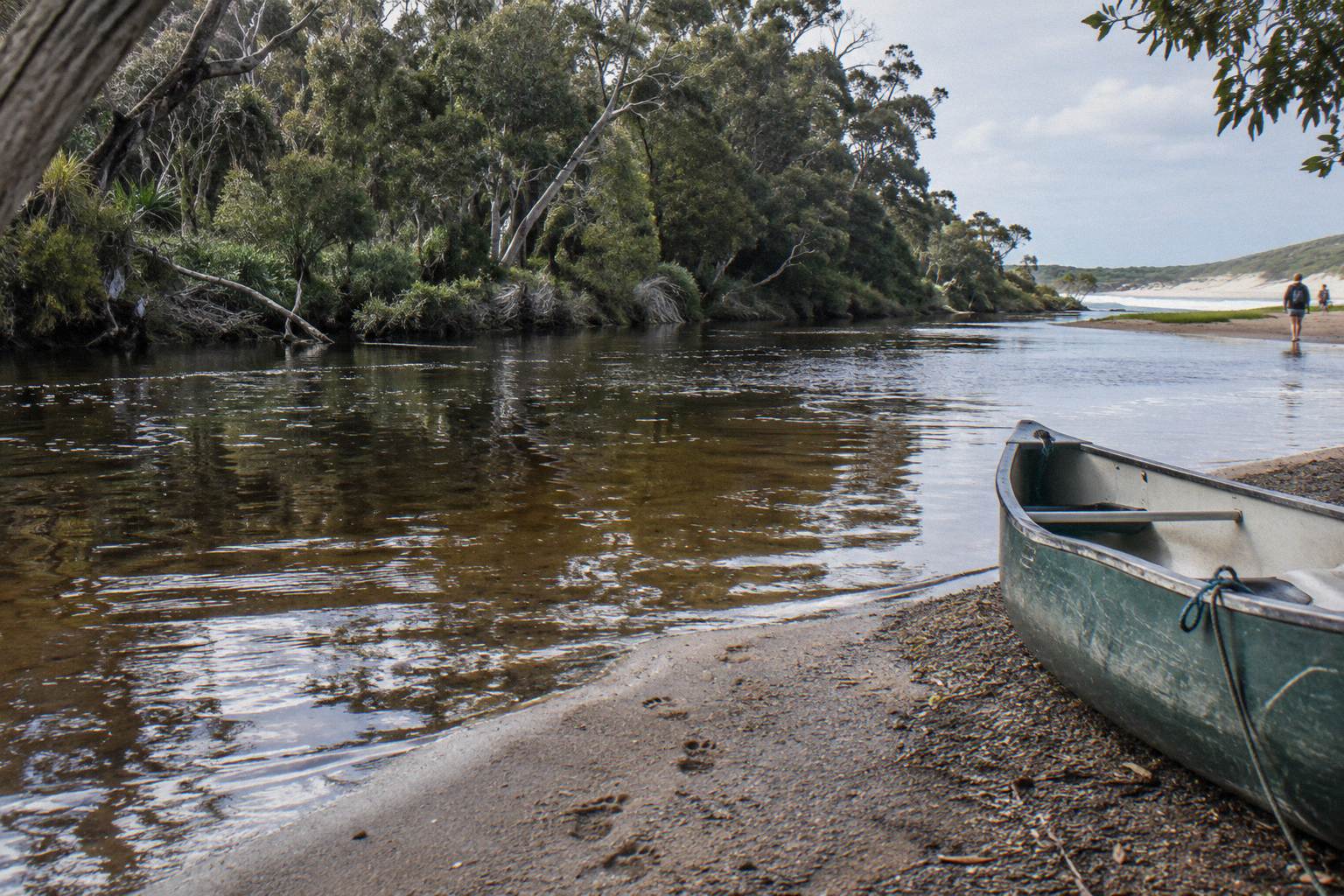
The Wadandi people know the Margaret River as Wooditjup, named after the magic man Wooditj. Devil's Lair shows Wadandi presence of at least 48,000 years. The Wild Food Canoe Lunch, from A$150 per person, 4.9 from 228 reviews, tells that history on the water and serves a wild food lunch with 20 native tastings.
To the Wadandi people, the Margaret River is Wooditjup, named after the magic man Wooditj. That single fact changes what a canoe paddle on this river is. It is not just a calm stretch of water with cliffs and kangaroo habitat, it is a named place inside a 48,000-year-old human story, and the two guided trips that paddle it lean into that story in different ways. Here is what culture adds to the day: what the Shire and the parks agency say, what the canoe operator tells you on the water, what the wild food lunch contains, and where the boundaries sit between heritage, pioneer history and a catering list.
One framing before anything else. The guided canoe trips described here are not Aboriginal-led cultural programs. No operator offers a Wadandi guide, a ceremony or Wadandi recipes. What they offer is a paddle through a culturally significant landscape, with First Nations and pioneer history told from the canoe, followed by a lunch built around native Australian ingredients. That is a real and worthwhile thing. It is just not the same thing as a Wadandi cultural experience, and knowing the difference helps you book the right day.
What Does Wadandi Mean For The River You Paddle?
Wadandi is the name of the Traditional Owners of this stretch of coast, and their name for the Margaret River is Wooditjup, after the magic man Wooditj. The Shire of Augusta Margaret River runs a Wooditjup Bilya Protection Strategy for the river, which is roughly 60 km long with a catchment of about 477 square kilometres and a 190 km network of tributaries, the largest being the Mowen River and Bramley Brook.
The spelling matters more than you might expect. The Shire writes Wadandi, while the state parks agency, the Department of Biodiversity, Conservation and Attractions, uses the spelling Wardandi. You will see both spellings on signs, brochures and websites around the region. The Shire's own words on the rivermouth are worth reading for any paddle: throughout the year the Rivermouth naturally opens and closes as river flows, rainfall and ocean conditions change, and water levels are lowest over summer and autumn.
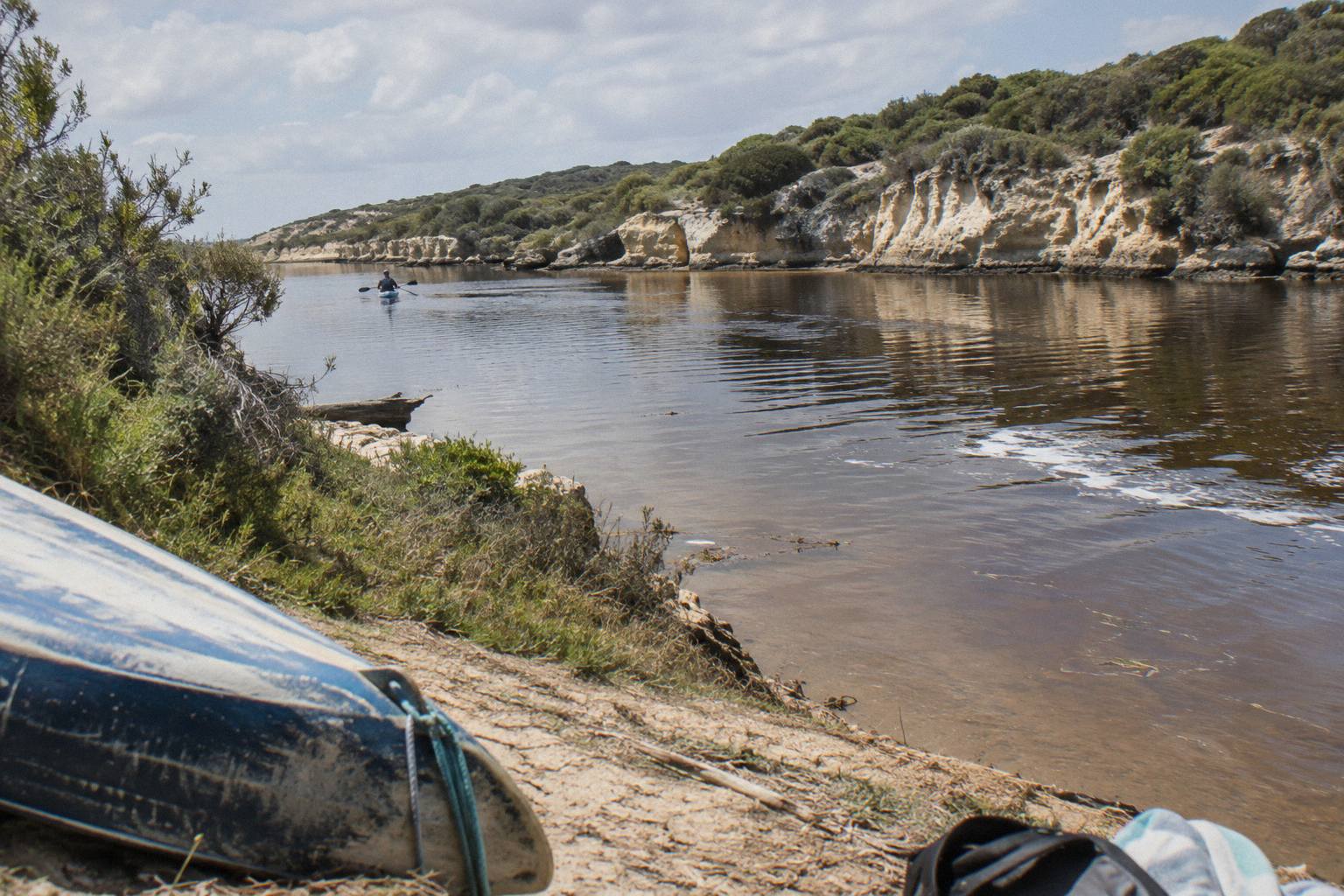
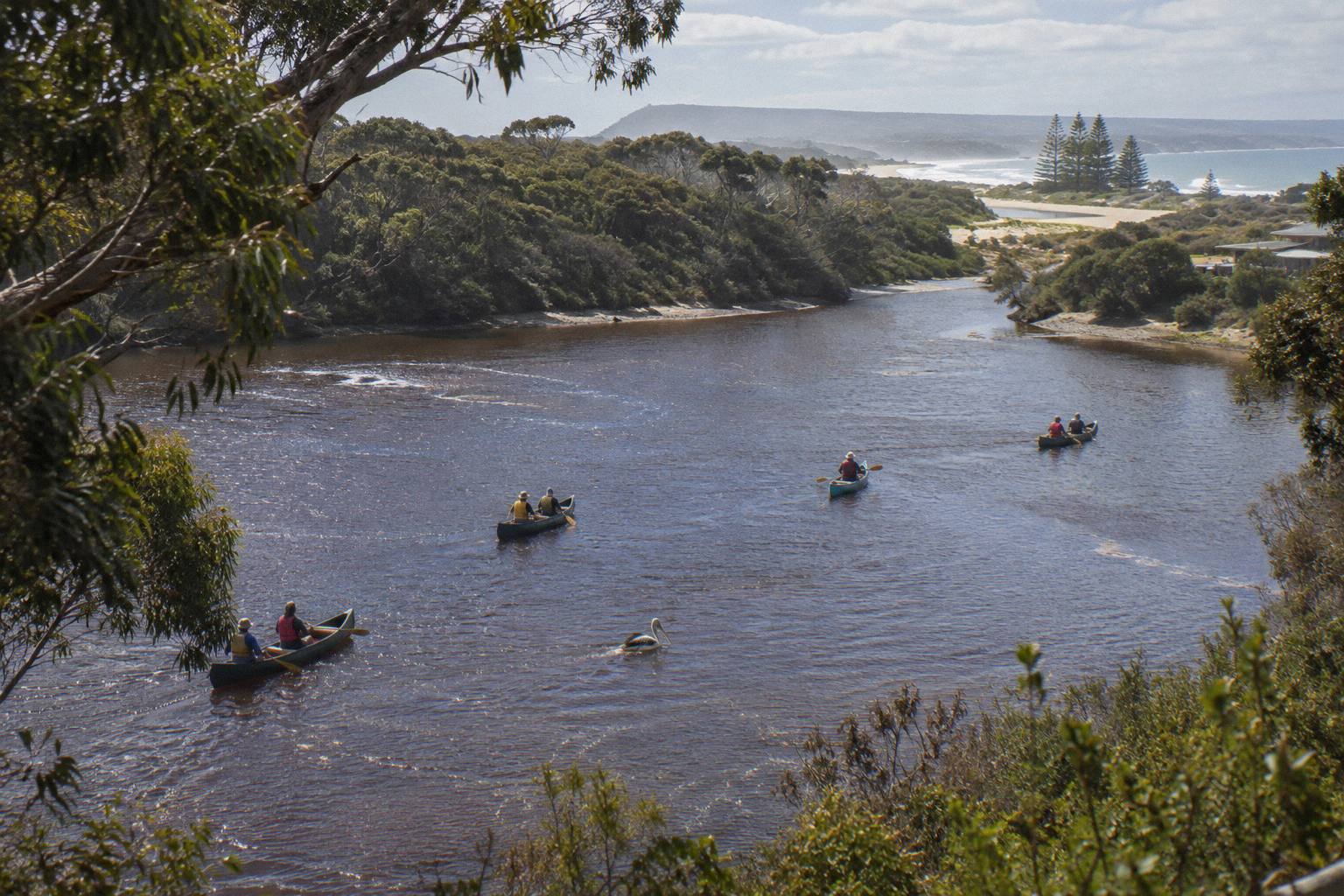
The river the canoes use is unusually protected. The canoe operator notes that no motor craft are permitted on the river, so the paddle happens on flat water without wake or engine noise. A self-guided hire base on the same stretch describes it as having no motor boats and no vehicle access for up to 3 km of paddling, and says that for most of the year it is more like a beautiful long lake with no strong river currents. Those are the hire base's words, not a rating of the guided trips, but they line up with what a guided paddle feels like here: quiet, slow-moving water between forested banks.
For paddlers, the cultural layer and the practical layer point the same way. A motor-free river that a community has fished, camped beside and named for tens of thousands of years is exactly the kind of place where a slow paddle and a story told from the bow are worth the time. If you are still weighing whether the experience justifies the price, the guide on whether a canoe paddle on this river is worth it works through that question with the same stated facts.
How Old Is The Wadandi Connection To This Country?
Devil's Lair, a site south of Margaret River, shows Wadandi presence in this region of at least 48,000 years, making this one of the longest continuous human stories in Australia. The Wadandi are the Traditional Owners of the Cape to Cape coast, and DBCA recognises the Wadandi people as the Traditional Owners of Leeuwin-Naturaliste National Park, through which the lower Margaret River flows to the sea.
The number deserves a pause. Forty-eight thousand years is not a rounding error away from the beginning of human history in Australia, it is close to the deep end of it. When a canoe guide on this river mentions the first inhabitants, the reference rests on a real archaeological record, not on atmosphere. The Shire publishes this on its Wooditjup Bilya page, and DBCA's acknowledgement appears on the park pages for the caves, cliffs and rivermouth country the paddle moves through.
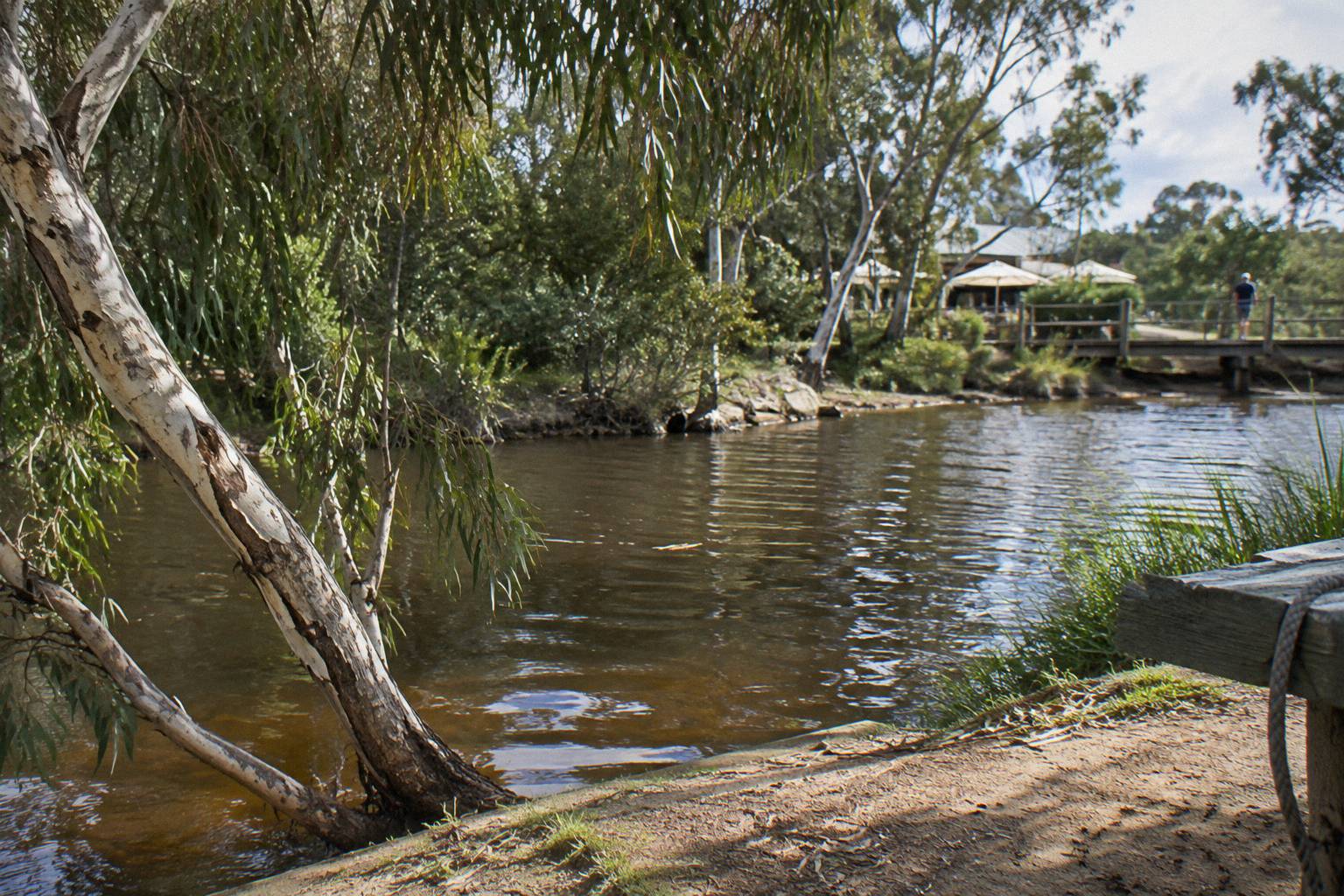
The connection also runs through seasonal movement. Wadandi know Ellensbrook, a little north of the rivermouth country, as Mokidup, a traditional summer camping spot, and the pattern of coastal camping across seasons shapes who was where, and when, along the very stretch of water the canoes use. The Shire's own framing, a protection strategy for Wooditjup Bilya rather than a tourism pitch, is the reason a paddle here can carry a story at all: the river is being managed as a living cultural asset, not just a recreation corridor.
If the cultural angle is what draws you, two trips let you touch it from the water, in different styles. The Wild Food Canoe Lunch is the four-hour paddle with the native-tastings lunch; the Canoe, 4x4 And Wine Day stretches the day to about 5.5 to 6 hours and adds a 4x4 leg on the cliffs and a winery lunch. Neither is a cultural program, both travel the same cultural landscape.
What Does The Canoe Operator Actually Say About First Nations History?
It is worth being precise about what that wording does and does not promise. "Pioneer and aboriginal sites" and "the history of the first inhabitants" are real, published claims on the operator's own product page. There is no claim of a Wadandi guide, no ceremony, no cultural program, and no suggestion that the lunch follows Wadandi recipes. If you want an Aboriginal-owned or Aboriginal-led tour, book elsewhere and ask operators directly. What is stated is a landscape-layered history: the deep Wadandi story of Wooditjup, then the pioneer layer of the Bussell family, told while you paddle past the actual places.
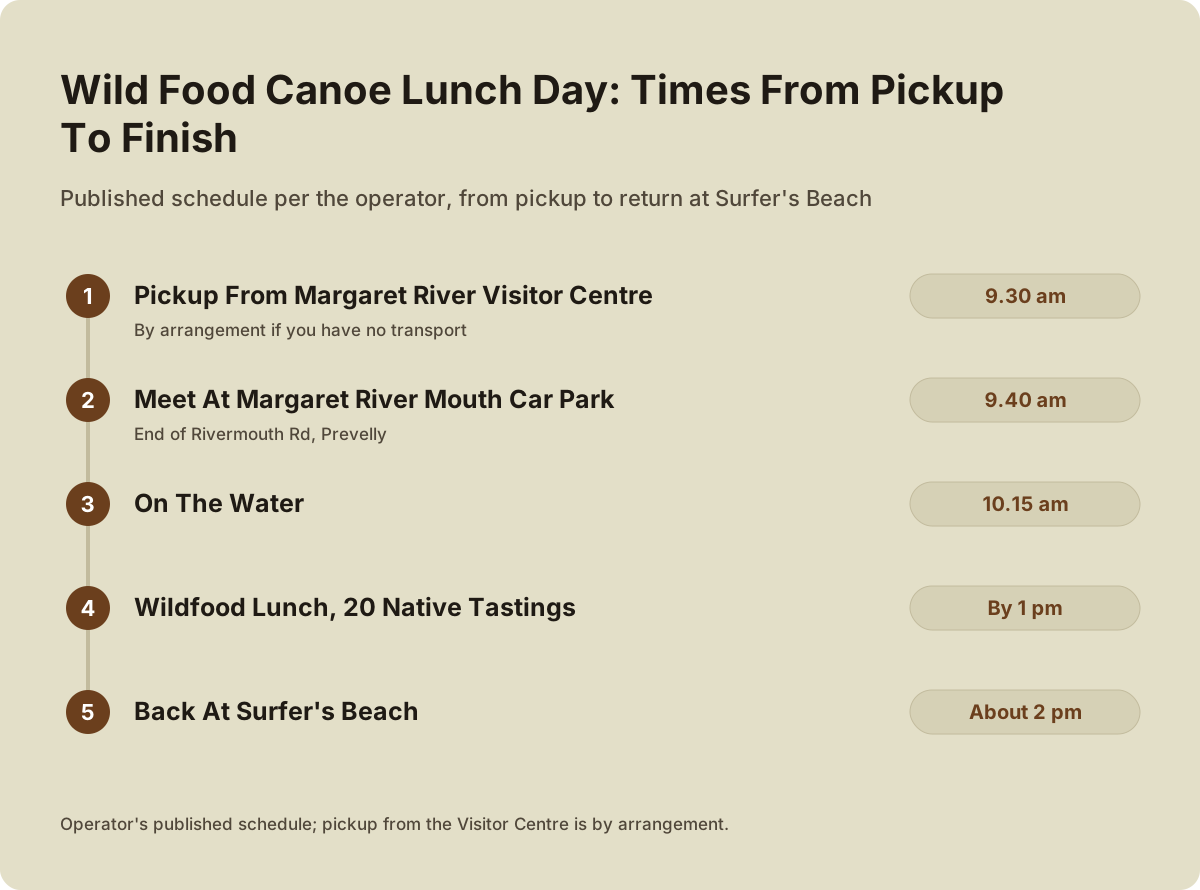
The timing of the day is published and stable. The trip meets about 9.40 am at the Margaret River mouth car park at the end of Rivermouth Rd, Prevelly, with pickup from the Margaret River Visitor Centre at 9.30 am by arrangement if you have no transport, though whether transport to the meeting point is included is reported differently by two booking pages, so ask the operator. You are on the water at 10.15 am, lunch is served by 1 pm, and you are back at Surfer's Beach about 2 pm, for a duration of about 4 to 4.5 hours. The operator runs the trip year round, its own claim. Canoes seat 2 to 5, equipment and instruction are provided, and the operator calls the trip suitable for all ability levels.
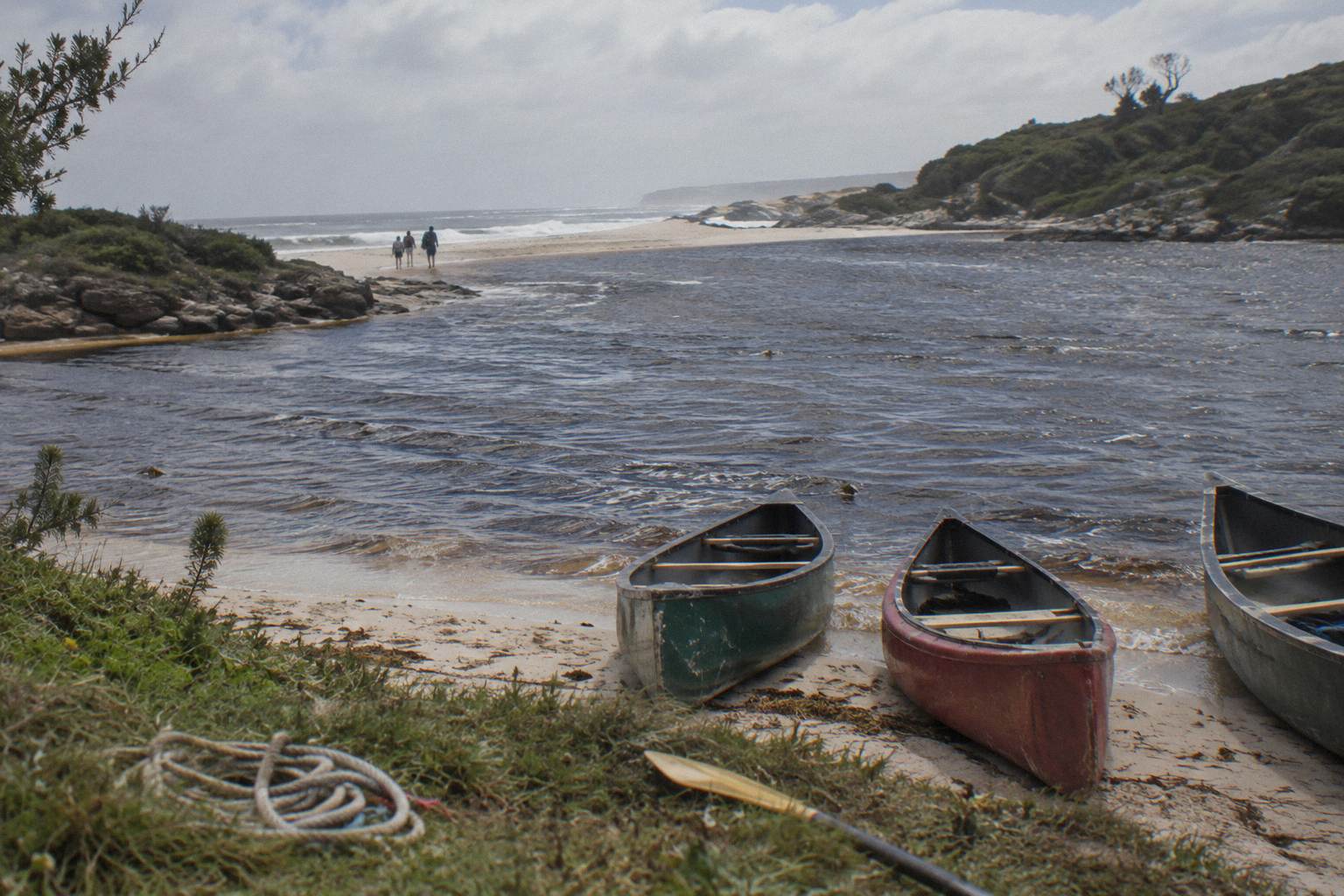
Several practical details are simply not published by the operator: minimum age, weight limits, swimming ability, what to bring, wet-weather policy and group size. The operator does not publish this, so ask when you book. Cancellation differs between booking pages, so check the booking page for the date you book rather than assuming one policy.
The shape of the morning, from meeting point to lunch, looks like this on the operator's published schedule.
| Time | What happens, per the operator |
|---|---|
| 9.30 am | Pickup from Margaret River Visitor Centre, by arrangement if you have no transport |
| 9.40 am | Meet at the Margaret River mouth car park, end of Rivermouth Rd, Prevelly |
| 10.15 am | On the water |
| By 1 pm | Wildfood lunch served, with 20 native tastings |
| About 2 pm | Back at Surfer's Beach |
For the fuller practical picture, the guide to the Bushtucker canoe paddle and wild food lunch covers logistics in detail, and vegetarian and dietary options on the canoe lunch handles the food questions separately.
What Is Actually In The 20 Native Tastings Lunch?
The operator describes the lunch as a wildfood lunch with 20 native tastings, and its published list names kangaroo, emu with wild nut pesto, wild turkey with rosella chutney and crocodile, plus pestos, chutneys, dips and baked breads. Vegetarians are catered for, the operator says. Nothing is published about vegan, gluten-free, halal or allergy options or children's portions, so ask the operator before booking if any of those matter to your group.
The number, 20, is the operator's own, and it is the most concrete cultural-adjacent promise of the day. This is Australian native food, kangaroo, emu, crocodile, rosella, wild bush spices in pestos and chutneys, served in a riverside setting after a morning on the water. The operator uses the terms "wild food" and "bush food" interchangeably. What the operator does not say, and what must not be claimed, is that these dishes are Wadandi dishes or follow Aboriginal recipes. They are a catered native-Australian menu inspired by bush food traditions, and that distinction matters.
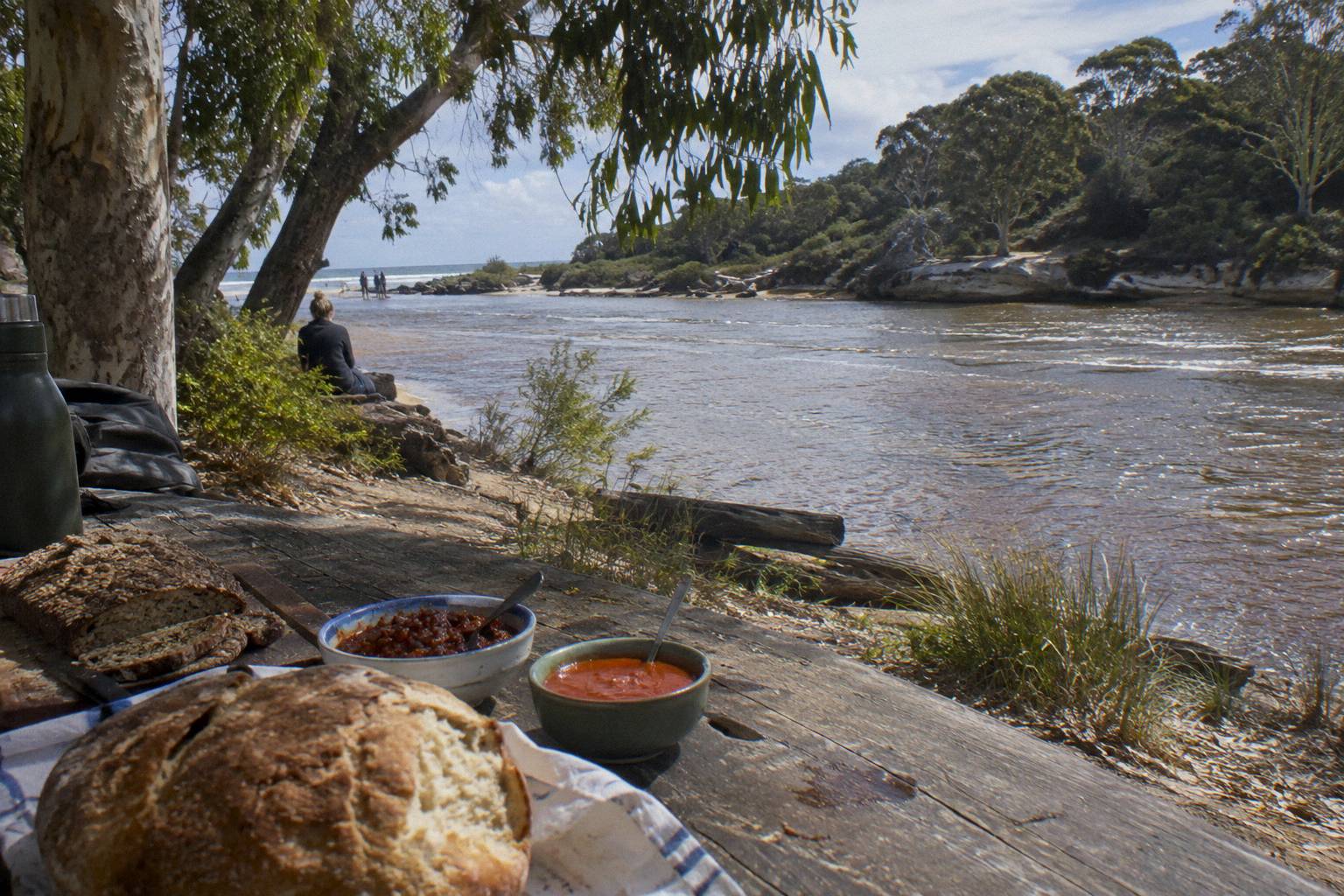
The lunch is served by 1 pm, roughly two and three-quarter hours after you launch, and it is included in the trip price of from A$150 per person in Australian dollars. If the menu is the main draw for you, the trips compared in what the price and the lunch include break the inclusions down line by line.
Who Says What: Operator, Shire And DBCA Compared
Three sources carry the cultural facts, and each owns different claims: the canoe operator covers the route, the storytelling and the lunch; the Shire of Augusta Margaret River covers the Wadandi name, the river's dimensions and the rivermouth behaviour; DBCA covers Traditional Ownership of the national park, Ellensbrook and the cave country. Where they overlap, they agree; where an operator does not publish something, no other source fills the gap.
The table below shows who stands behind each statement. It is the quickest way to see the boundary between tourism wording and official record.
| Claim | Source | Exact standing |
|---|---|---|
| River known to Wadandi as Wooditjup, after the magic man Wooditj | Shire of Augusta Margaret River | Shire's published wording |
| Devil's Lair shows Wadandi presence of at least 48,000 years | Shire of Augusta Margaret River | Archaeological record cited by the Shire |
| River about 60 km long, catchment about 477 sq km, 190 km of tributaries | Shire of Augusta Margaret River | Shire's published figures |
| Rivermouth opens and closes with flows, rainfall and ocean conditions | Shire, page dated 26 Oct 2026 | Ongoing natural process |
| Wadandi people are Traditional Owners of Leeuwin-Naturaliste National Park | DBCA | DBCA's own spelling in its acknowledgement |
| Paddle passes "pioneer and aboriginal sites"; history of first inhabitants and the Bussell family told | Bushtucker Wine And River Tours | Operator wording on its product page |
| Wildfood lunch with 20 native tastings; vegetarians catered | Bushtucker Wine And River Tours | Operator wording |
| No motor craft permitted on the river | Bushtucker Wine And River Tours | Operator statement |
| Wooditjup Bilya Protection Strategy | Shire of Augusta Margaret River | Name of the Shire's river strategy |
The official river page is worth reading directly: the Shire's Wooditjup Bilya protection pages carry the name, the strategy and the rivermouth guidance. For the heritage places nearby, DBCA's Ellensbrook (Mokidup) park page is the primary source.
Two second-order facts fall out of that table. First, the paddling conditions are a Shire matter, not a tour matter: water levels are lowest over summer and autumn, and no official water temperature, depth, flow rate or clarity figure exists for this river. Second, the parks agency's cave country sits inside the same national park the river flows through, which is why a culture-focused day pairs naturally with a cave visit.
Ellensbrook (Mokidup) And The Bussell Layer Of The Story
Ellensbrook, which Wadandi know as Mokidup, a traditional summer camping spot, is where Alfred Bussell began building in 1857 for his wife Ellen; the couple later moved to Wallcliffe House at the river mouth in 1865. The National Trust runs self-guided tours of Ellensbrook once a day, Thursday to Sunday, per DBCA. This is the pioneer chapter of the same story the canoe guide tells about the Bussell family of Busselton.
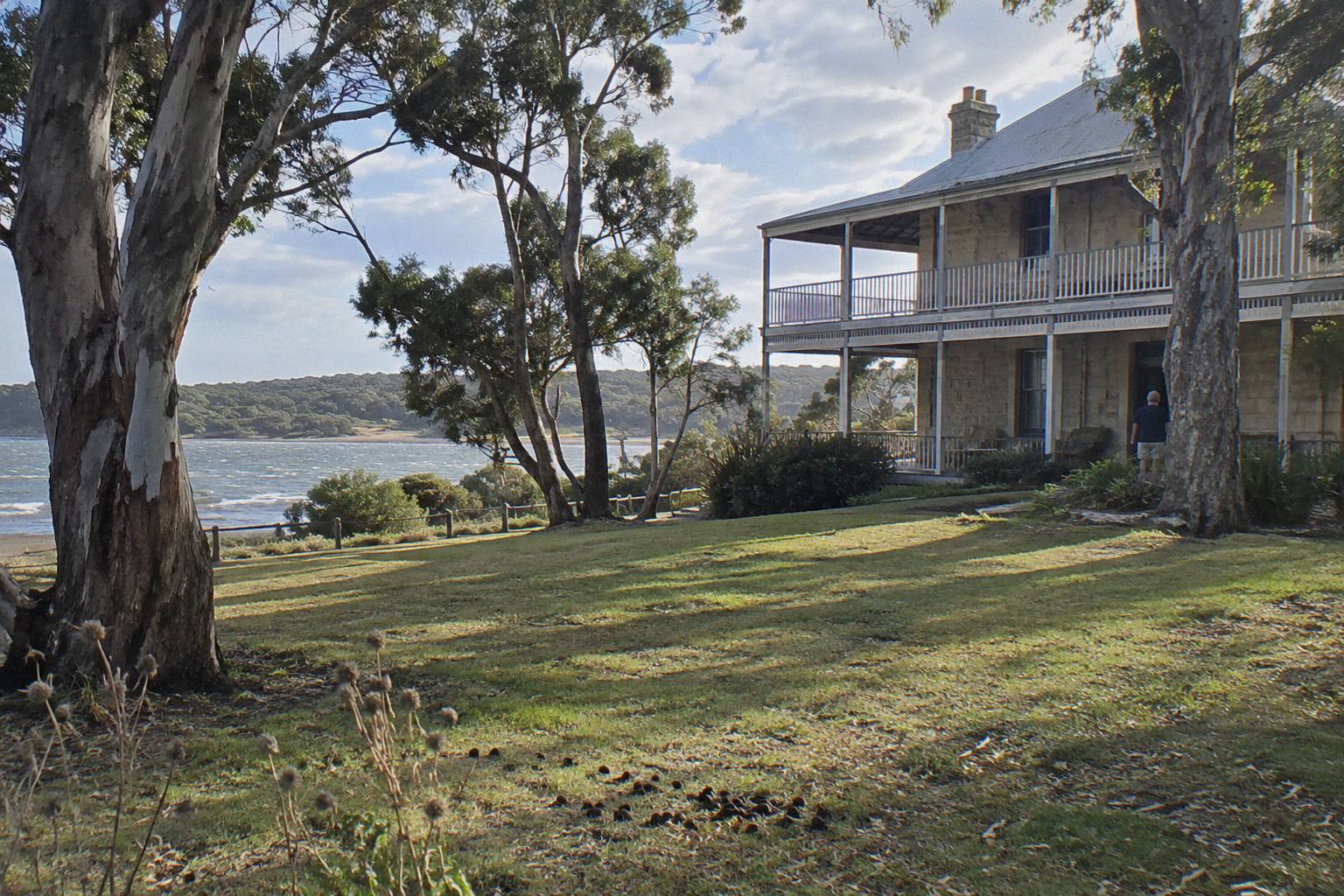
The two layers of the paddle's storytelling, Wadandi and pioneer, meet in real places within a short drive of the rivermouth. Mokidup was a seasonal camping place long before it carried Ellen Bussell's name, and Wallcliffe House stood at the river mouth itself, the very stretch the canoes launch from. When the operator tells the history of the first inhabitants and then the Bussells, the sequence is not decoration: it is the actual order of occupation of the country you are floating through.
Ellensbrook makes an easy before-or-after stop on a culture-focused day, and it sits in the same national park band as the caves. If you are building the day around the paddle, the guide to planning a Margaret River day around a canoe paddle sequences the stops, and caves near the canoe paddle route covers the cave options, all of which sit inside Leeuwin-Naturaliste National Park, where entry is free but cave admission fees apply separately.
What The Two Guided Days Cost And How They Differ
The Wild Food Canoe Lunch runs from A$150 per person, rated 4.9 from 228 reviews, for about 4 to 4.5 hours; the Canoe, 4x4 And Wine Day runs from A$248 per person, rated 5.0 from 2,100+ reviews, for about 5.5 to 6 hours. They are different trip styles rather than rivals: a paddle-and-lunch day against a longer canoe, 4x4 and wine-lunch day, and neither is framed as better.
The comparison matters because both trips travel the same cultural landscape but spend different amounts of the day in it. The Wild Food Canoe Lunch keeps the whole day on the river, with the 20-tasting lunch as the centrepiece and the storytelling from the canoe. The Canoe, 4x4 And Wine Day, run by Margaret River Discovery Co, paddles a section of the river, then moves to a beach coffee stop, a waterhole with freshwater marron and local honey, lunch with premium wine in the barrel room at Fraser Gallop Estate, and a 4x4 trip with a short walk on the Wilyabrup Cliffs section of the Cape to Cape Track, citing Yalgardup Falls as a dreamtime site. It departs 10:15 am from the back car park of the Margaret River Visitor Centre, runs Monday to Friday, takes at most six guests, and is the trip with the most reviews.
| Wild Food Canoe Lunch | Canoe, 4x4 And Wine Day | |
|---|---|---|
| Operator | Bushtucker Wine And River Tours | Margaret River Discovery Co |
| Price | from A$150 per person | from A$248 per person |
| Rating | 4.9 from 228 reviews | 5.0 from 2,100+ reviews |
| Duration | about 4 to 4.5 hours | about 5.5 to 6 hours |
| Meeting | Margaret River mouth car park, Rivermouth Rd, Prevelly, about 9.40 am | Back car park, Margaret River Visitor Centre, 10:15 am |
| Days | year round, operator claim | Monday to Friday |
| Cultural content | first inhabitants and Bussell history told from the canoe | river paddle plus dreamtime site and Cape to Cape country |
| Food | wild food lunch, 20 native tastings | winery lunch with premium wine in a barrel room |
| Group size | not published; ask the operator | at most six guests, operator wording |
On age suitability the two booking pages for the longer day differ: one says under 18s are not suitable, another says minimum 17, so check before you book. Cancellation likewise differs by booking page for both trips; check the booking page for the date you book rather than relying on any single stated policy.
What Does The Cultural Layer Actually Add To The Day?
The cultural layer turns a pleasant flat-water paddle into an informed one: you learn the river's name is Wooditjup, that Wadandi presence here runs back at least 48,000 years, and that your lunch plate carries 20 native Australian tastings. It costs nothing extra, and it lets you tell which parts of the day are heritage, which are history-telling, and which are simply catering.
The paddle itself is gentle by design. The river is motor-free, the operator says no motor craft are permitted, the canoes seat 2 to 5, and instruction and equipment are included. You do not need experience, a point covered in detail in whether you need experience to canoe the Margaret River, and the operator calls the trip suitable for all ability levels. The storytelling fills the slow stretches: cliffs, forested banks where kangaroos live, pioneer and Aboriginal sites, and a guide weaving the first inhabitants and the Bussells into the scenery.
The rivermouth's behaviour is the one natural variable worth knowing. The Shire says the mouth opens and closes with river flows, rainfall and ocean conditions, so no one can promise you a particular rivermouth scene on a given day. Levels are lowest over summer and autumn, which tends to mean the calmest, most lake-like paddling. If timing your trip around conditions matters, paddling weather month by month works through the seasons with official averages: at Witchcliffe, inland of the river, July is the wettest month at 194.1 mm on average and February the driest at 12.2 mm.
If you are curious about Wadandi bush food and book the Wild Food Canoe Lunch, you get the fullest version of the cultural thread: the named river, the deep history, the storytelling and the native-tastings lunch in one four-hour arc.
Common Questions About Wadandi Bush Food And The River Paddle
Is The Canoe Paddle Aboriginal-Led?
No. The operators make no claim of a Wadandi guide, ceremony or cultural program. The Wild Food Canoe Lunch includes history of the first inhabitants and the Bussell family told by the operator's guide from the canoe, past sites the operator describes as pioneer and aboriginal. If an Aboriginal-led experience matters to you, ask operators directly before booking.
Does The Wild Food Lunch Use Wadandi Recipes?
The operator does not claim that. The published description is a wildfood lunch with 20 native tastings, naming kangaroo, emu with wild nut pesto, wild turkey with rosella chutney and crocodile, plus pestos, chutneys, dips and baked breads. Vegetarians are catered for; nothing is published about vegan, gluten-free, halal or allergy options, so ask the operator before booking.
What Does Wadandi Mean?
Wadandi is the name of the Traditional Owners of this part of the Cape to Cape coast. The Shire of Augusta Margaret River spells it Wadandi, while DBCA, the parks agency, uses a different spelling in its acknowledgement of the Traditional Owners of Leeuwin-Naturaliste National Park. Both spellings refer to the same people.
What Is The Wadandi Name For The Margaret River?
Wooditjup, named after the magic man Wooditj, according to the Shire of Augusta Margaret River, whose river strategy is called the Wooditjup Bilya Protection Strategy. The river is about 60 km long with a catchment of about 477 square kilometres.
How Old Is The Wadandi Connection To The Margaret River Region?
Devil's Lair, south of Margaret River, shows Wadandi presence of at least 48,000 years, per the Shire's published record. That is among the oldest documented human connections in Australia.
Can You Visit Wadandi Cultural Sites Near The Canoe Paddle?
Ellensbrook, which Wadandi know as Mokidup, a traditional summer camping spot, is in the national park north of the rivermouth country; National Trust self-guided tours run once a day, Thursday to Sunday. The caves of Leeuwin-Naturaliste National Park, where park entry is free but cave admission fees apply, are also part of the same Wadandi-owned country.