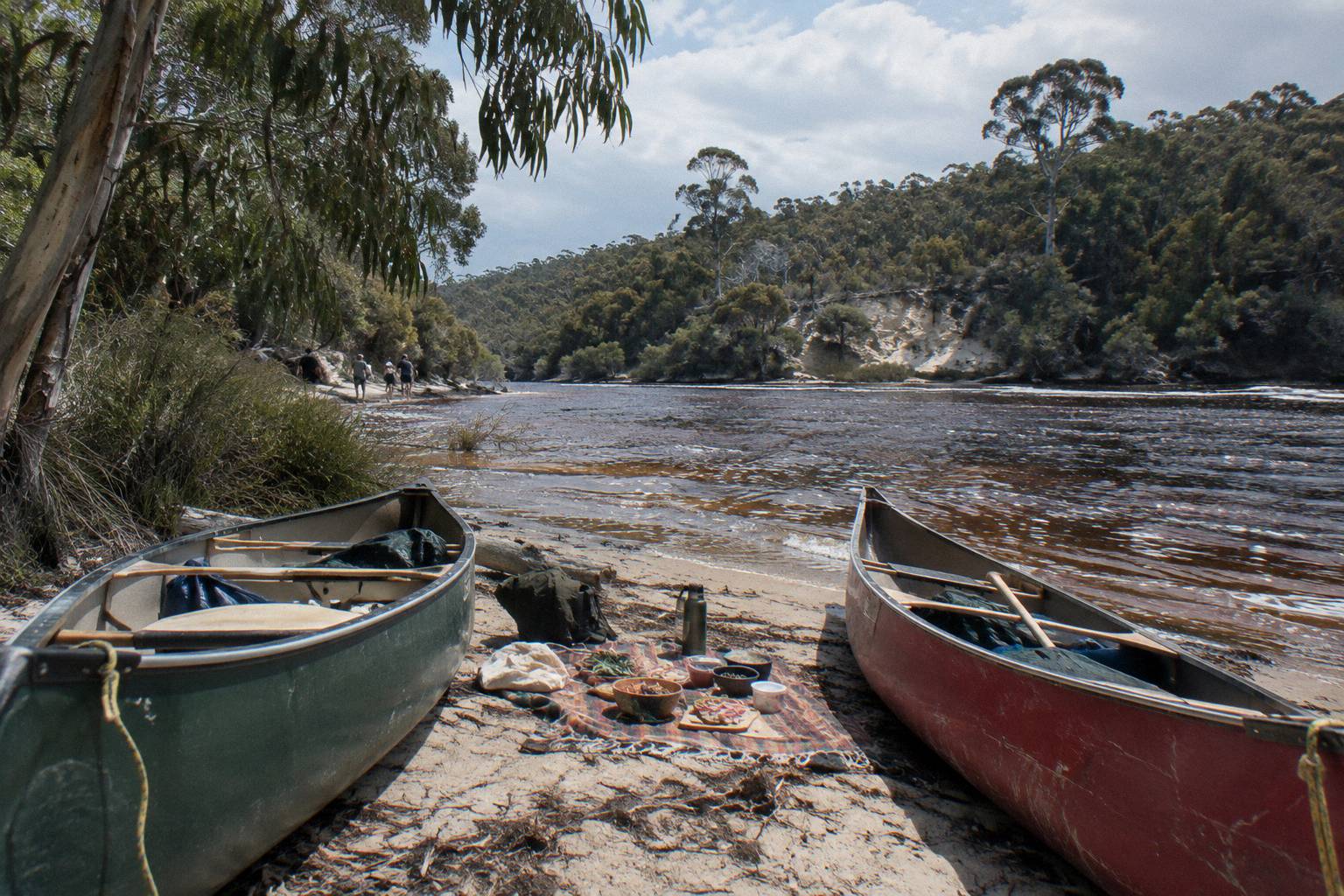
Can You Swim During A Canoe Paddle On The Margaret River?
No operator publishes a swimming rule or a swim stop for Margaret River canoe paddles. Here is what is actually documented about the river, the sandbar mouth, and what to ask before you pack swimwear.
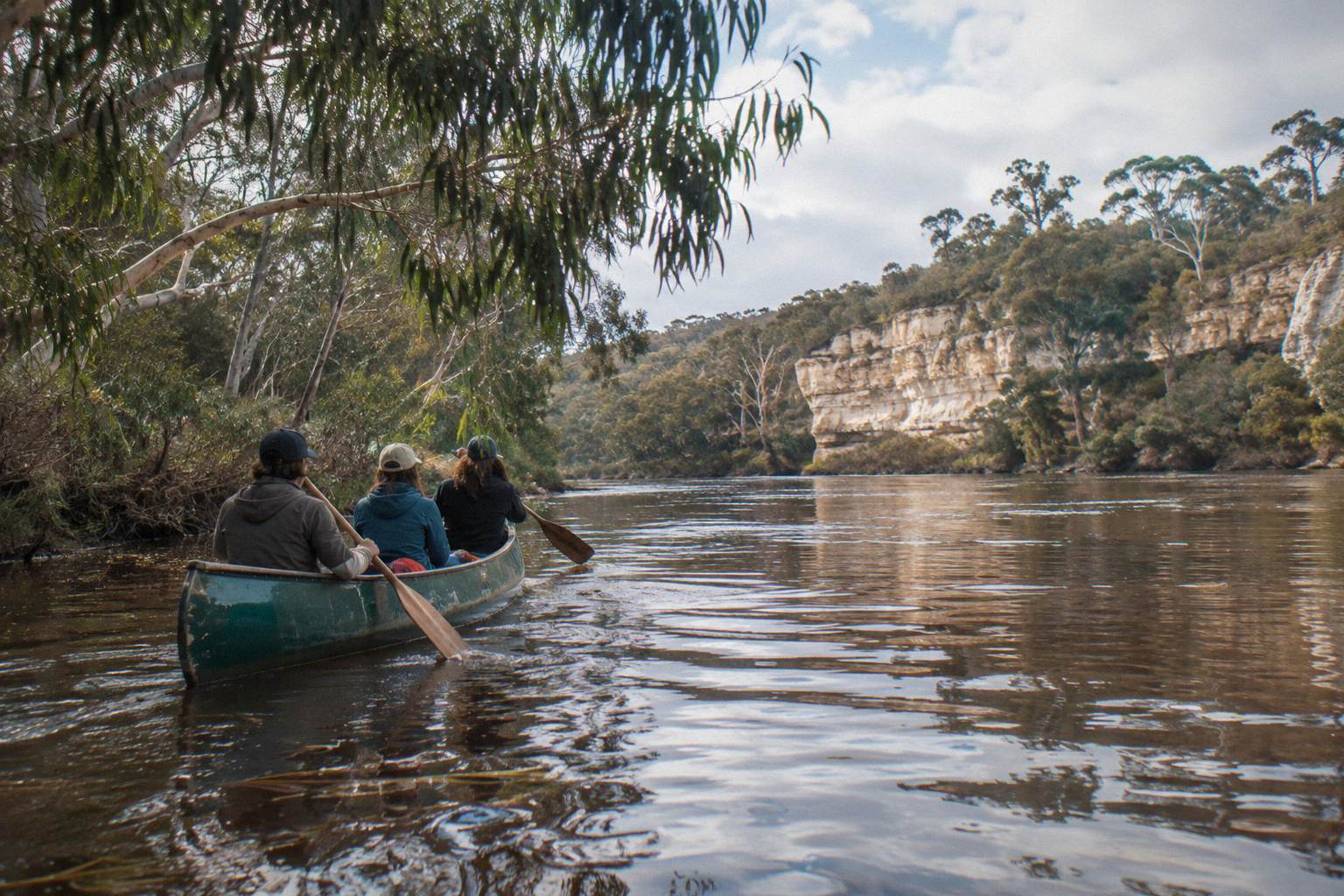
No Margaret River canoe operator offers a documented swimming opportunity, a swim stop, or a rule against swimming, so no clear answer exists in either direction. Neither the Wild Food Canoe Lunch nor the Canoe, 4x4 And Wine Day lists swimming ability as a requirement, and neither promises a dip. The only safe position is to ask the operator directly before you book, and to pack on the assumption you may stay dry.
That is frustrating when you are deciding what to pack, so stick to what is actually documented about the river rather than the swim claim nobody has made. It matters because a lot of regional travel copy implies swimming is part of any water-based day out, and the Margaret River is genuinely not that kind of waterway in any published sense. Reading between the lines of marketing copy is exactly how wrong expectations get built.
The two guided products that include canoeing are the Wild Food Canoe Lunch, run by Bushtucker Wine And River Tours, and the Canoe, 4x4 And Wine Day, run by Margaret River Discovery Co. They are different trip styles rather than rivals: one is a four-hour paddle with a wild food lunch, the other a longer day that adds a 4x4 leg and a lunch with wine. Neither one mentions swimming at all.
If your real question is whether you need to be able to swim to take part, that is also unpublished. The operator of the canoe lunch says the trip is "suitable for all ability levels" and that canoes seat 2 to 5 people, with equipment and instruction provided. That is the full extent of the published suitability information, and it says nothing about swimming either way.
Can You Swim? Neither Operator Gives A Swimming Rule
Guided paddle operators on this river publish meeting times, prices, food and cancellation terms, but leave swimming entirely unaddressed. That silence is consistent across both operators' own pages and their booking pages. It means a booker cannot confirm swimwear is useful, and cannot assume swimming is forbidden either. The practical reading is that swimming is simply not part of the advertised product on either trip.
There is a good structural reason for the silence. The paddle runs upstream from the river mouth into the river valley, past cliffs and forested banks, and the trip narrative on both operators' pages is about heritage, food and scenery rather than water activities. The canoe lunch tells the history of the first inhabitants and of the Bussell family of Busselton while paddling past what the operator calls pioneer and aboriginal sites. A swim stop does not fit that shape of day, and nobody selling it claims one does.
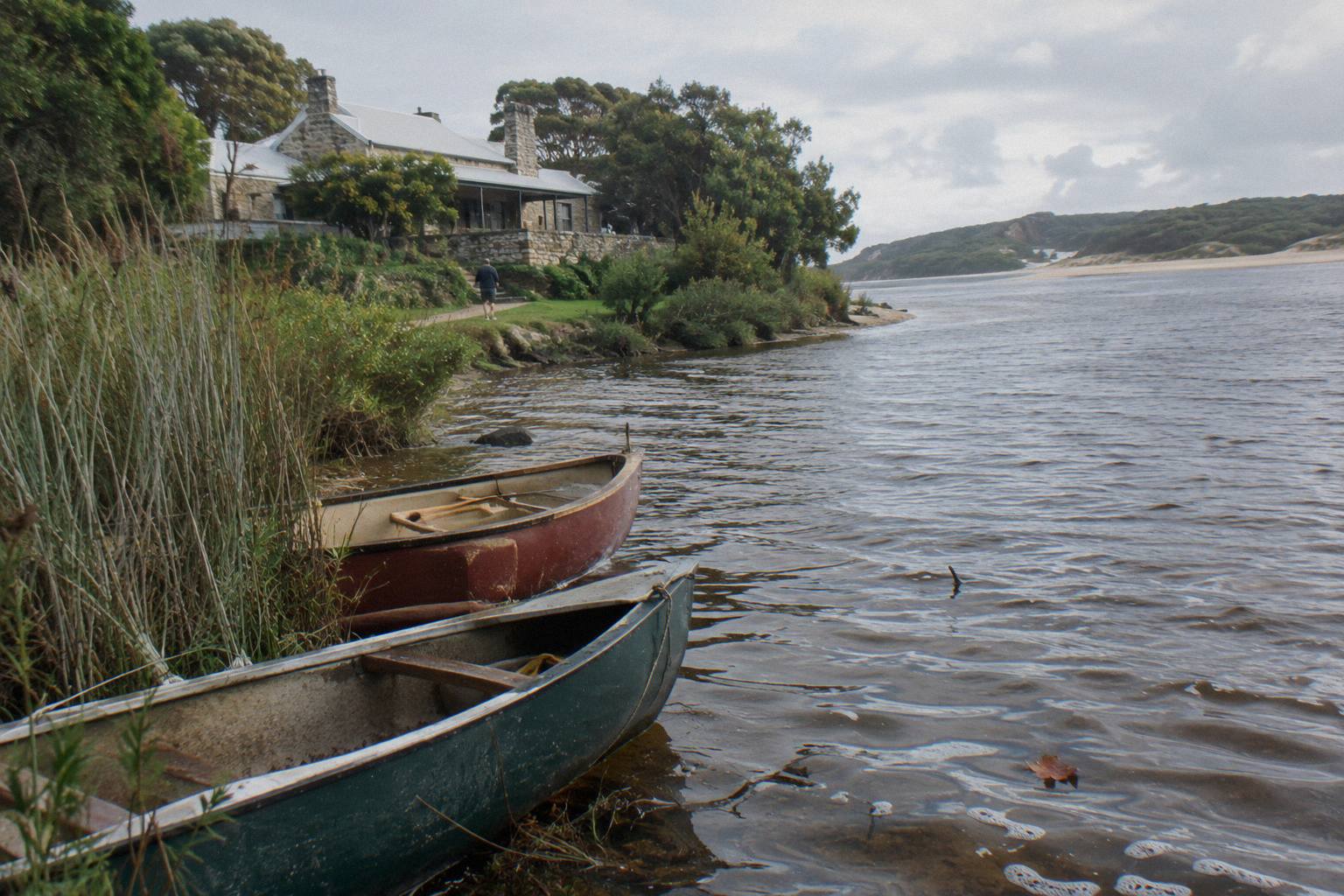
The scope of what is and is not published is worth setting out plainly, because it is easy to read a gap as a hidden answer. It is not. An absence of information is not information, and a booker who assumes either a yes or a no from silence is guessing. Here is the full picture for both trips.
| Question a booker asks | Wild Food Canoe Lunch | Canoe, 4x4 And Wine Day |
|---|---|---|
| Is there a swim stop? | Not published | Not published |
| Is swimming allowed? | Not published | Not published |
| Is swimming forbidden? | Not published | Not published |
| Is swim ability required? | Not published | Not published |
| What ability is stated? | "Suitable for all ability levels" (operator) | At most six guests, short walk, 4WD leg (operator) |
| Will you get wet? | No claim made | Operator says "you won't get wet, dirty or fall in" |
One row deserves careful handling. The Discovery Co operator uses the phrase "you won't get wet, dirty or fall in" in its own description of the canoe leg. That is an operator's marketing reassurance about comfort, not a safety rule or a swimming policy, so do not treat it as a promise on the operator's behalf. Read it as a signal that the paddle is designed to be a calm one, then ask your own questions before booking.
What The River Is Actually Like To Paddle
The Margaret River's lower stretch is documented as calm and motor-free: the canoe operator states that "no motor craft are permitted on the river", and a self-guided hire base describes its section as "more like a beautiful long lake with no strong river currents" for most of the year. Those are descriptions of paddling conditions, not swimming invitations, and no official temperature, depth or flow figure exists for the river at all.
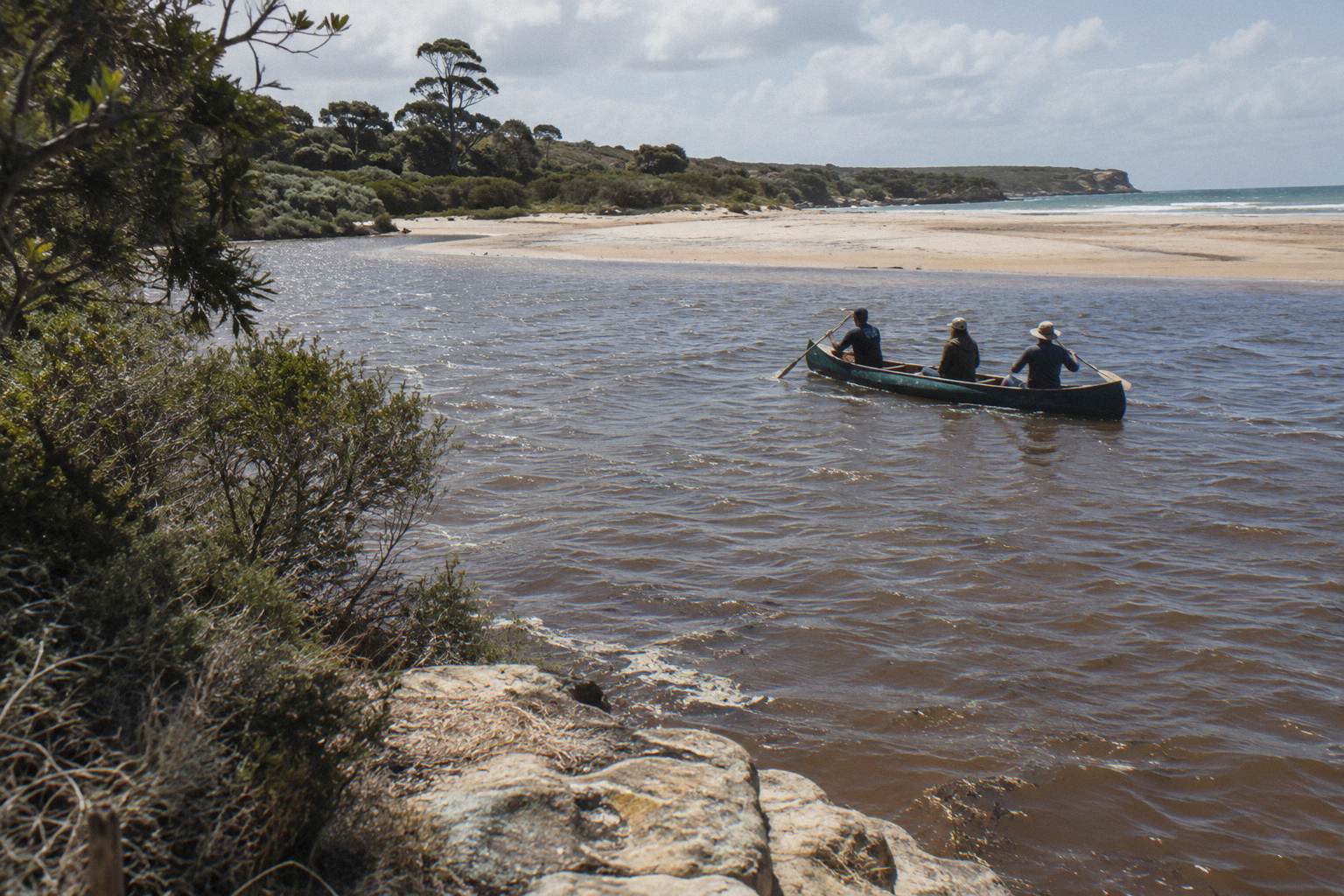
Start with the geography, because it explains the calm. The river is known to the Wadandi people as Wooditjup, named after the magic man Wooditj. It runs about 60 km with a catchment of about 477 square kilometres and a 190 km network of tributaries, the largest being the Mowen River and Bramley Brook. The Shire of Augusta Margaret River protects it under the Wooditjup Bilya Protection Strategy, and its own page on the river mouth notes that the sandbar opens and closes naturally as flows, rainfall and ocean conditions change.
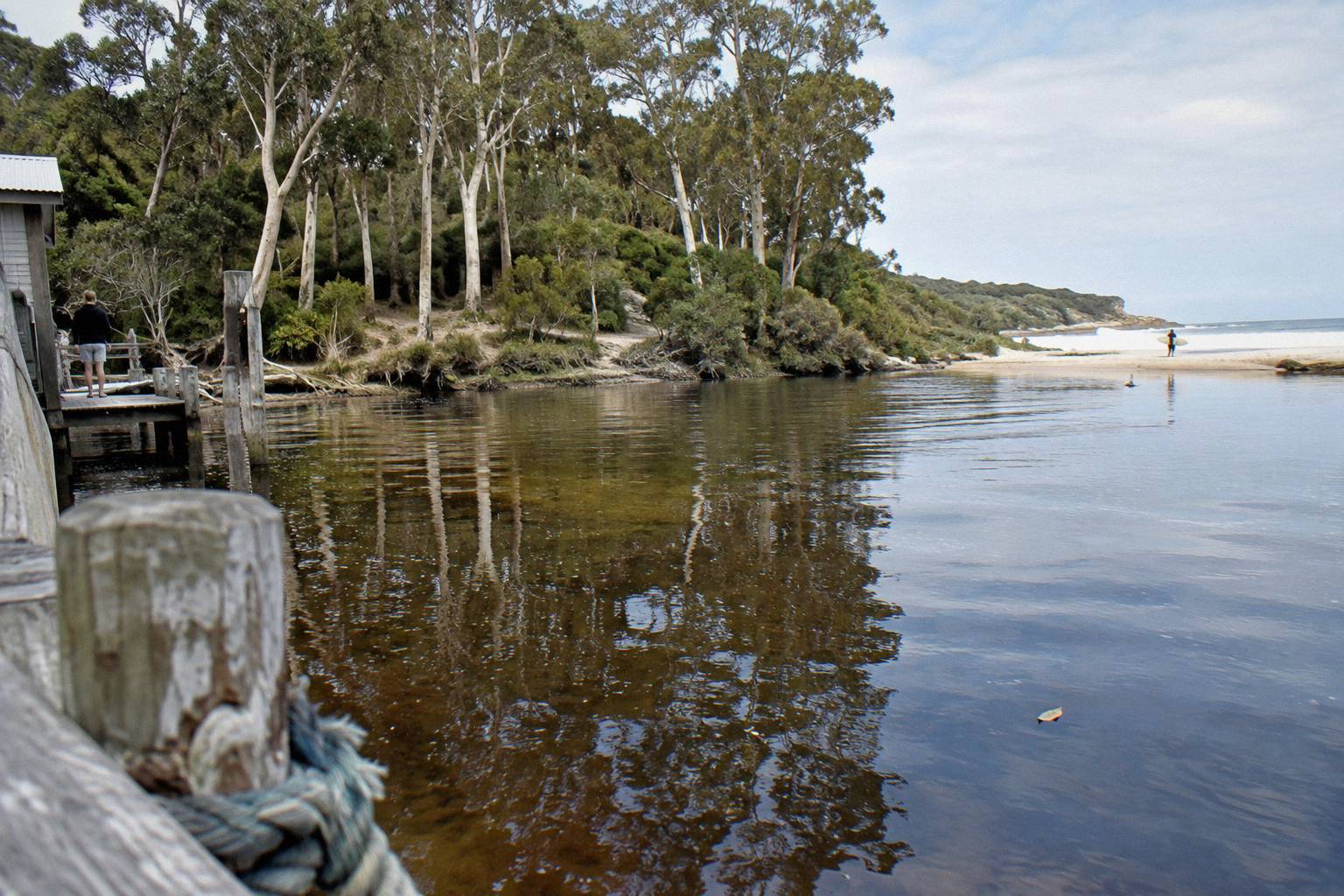
The hire base picture is the closest thing to a condition report, and it is worth attributing carefully. That business says the stretch it hires on has "no motor boats here and no vehicle access to this section of the river" for "up to 3km" of paddling, and that "for most of the year it is more like a beautiful long lake with no strong river currents", while the mouth opens "for a short period each year". These are that operator's words about its own hire stretch. The guided trips with them are consistent with what the canoe tour operator says about motor craft.
On the question of temperature, be aware that no official water temperature, depth, flow rate or clarity figure for the Margaret River could be verified. Do not trust any page that tells you the water is warm or cold, or that quotes a degree number. The climate data that does exist is air temperature and rainfall, published by the Bureau of Meteorology, and the nearest inland station at Witchcliffe records a hottest mean maximum of 27.1 °C in February and a coolest of 16.4 °C in July, with rainfall peaking at 194.1 mm in July and bottoming out at 12.2 mm in February. Air figures only, and never a claim about how the water feels.
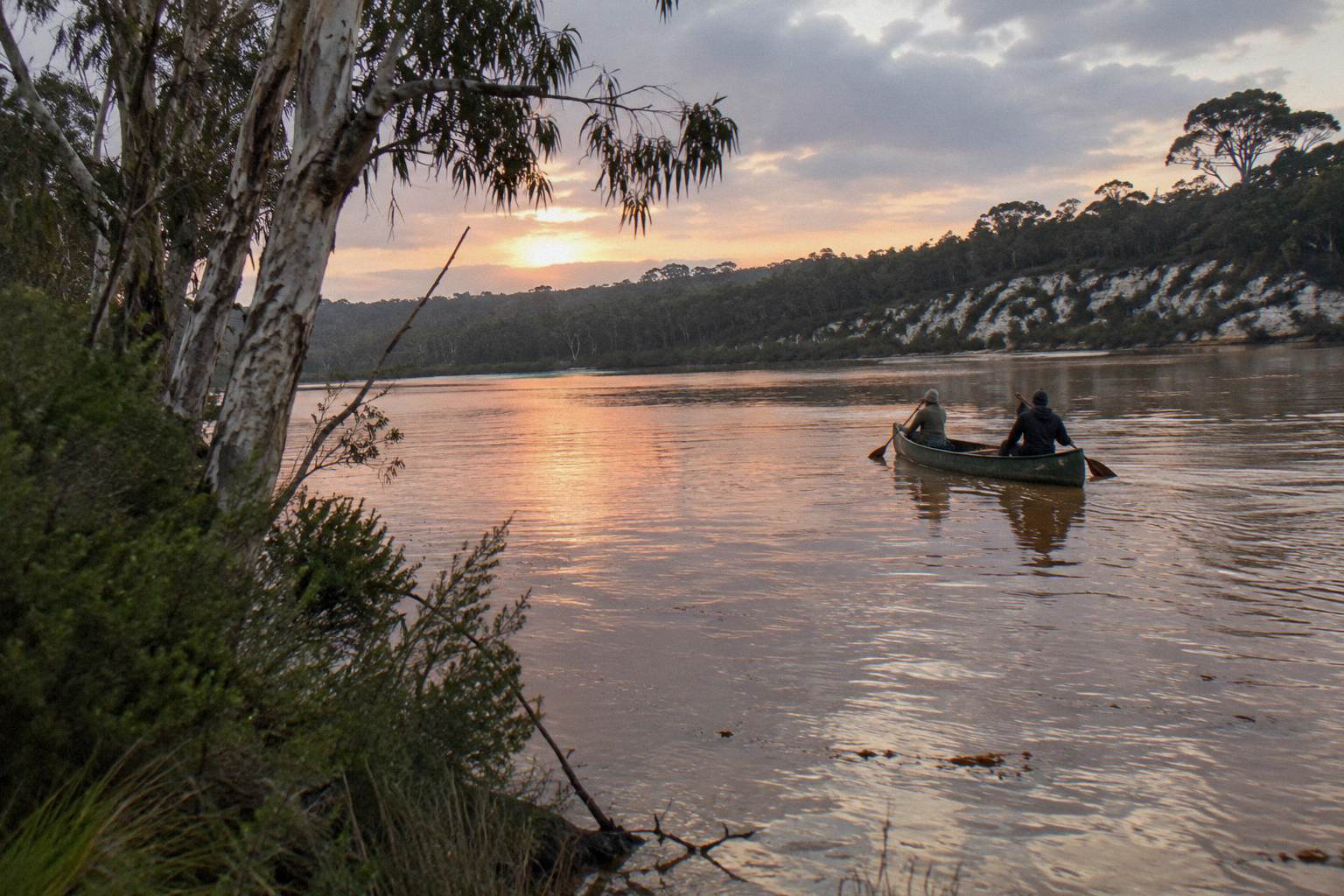
A practical way to read those quotes: two businesses describe the same lower river, one from a tour seat and one from a hire base, and they agree on the single point that matters to a swim plan, namely that motors and vehicle access are absent from this stretch. Neither quote promises stillness on a given day, and the hire
The Sandbar Mouth And Why The River Changes Shape
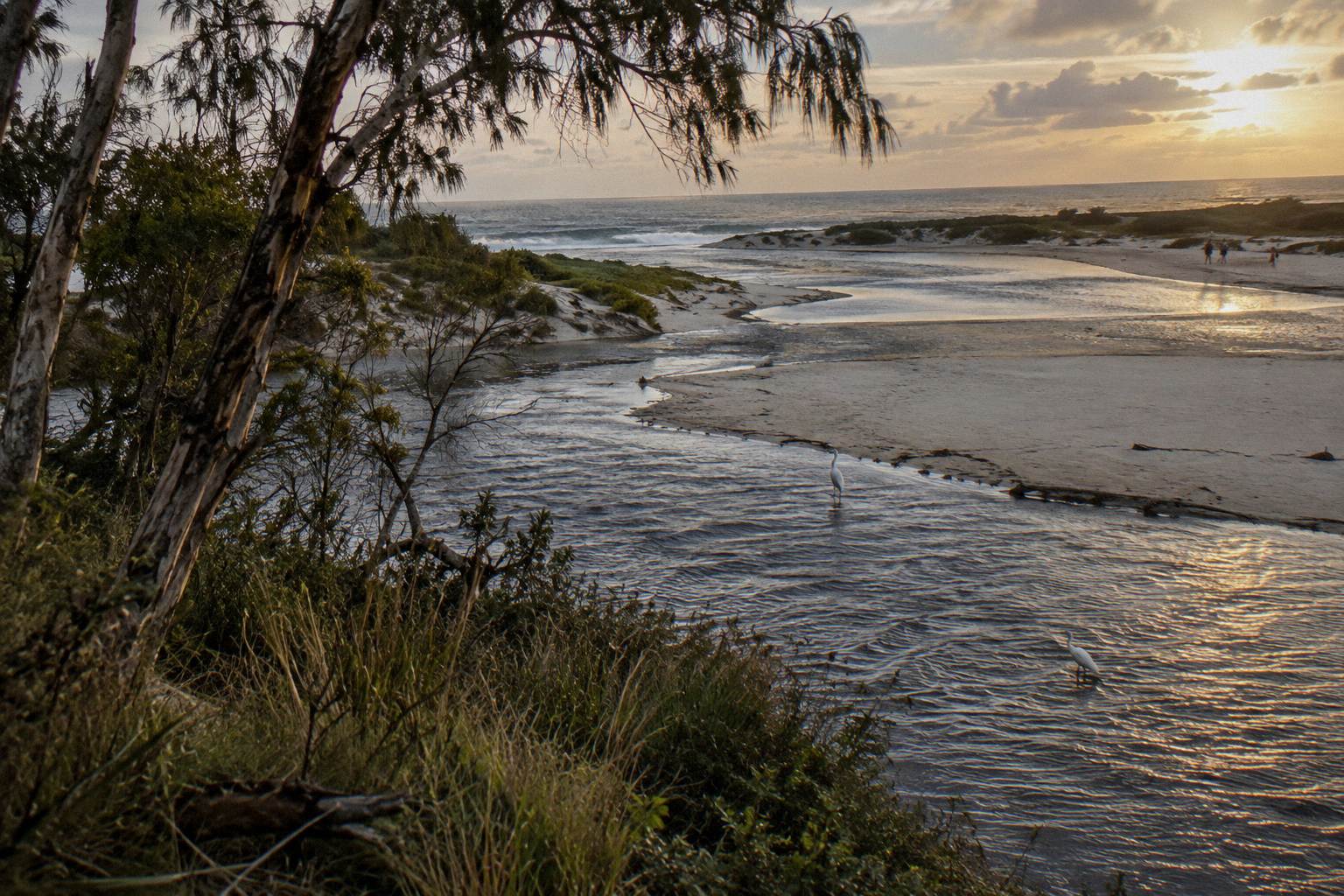
The river mouth at Prevelly naturally opens and closes through the year as river flows, rainfall and ocean conditions change, and when the sandbar is closed, freshwater pools form in the lower river. The Shire of Augusta Margaret River says water levels are lowest over summer and autumn, and it asks visitors not to dig channels through the sandbar. No guided paddle promises the mouth will be open on any given day.
This matters to a swim question more than it first appears, because the shape of the lower river is not fixed. The same body of water can be a closed, pooling lower river one month and an open channel to the sea for a short period another month. The Shire's guidance is the authority here, and it is explicit that the change is natural and ongoing rather than an event you can time from a calendar.
| What is documented | Who says it | What it means for a booker |
|---|---|---|
| The Rivermouth opens and closes through the year | Shire of Augusta Margaret River | Do not expect any specific mouth state on your date |
| Closed sandbar forms freshwater pools in the lower river | Shire of Augusta Margaret River | The lower river can be pooled and still |
| Water levels lowest over summer and autumn | Shire of Augusta Margaret River | Later-summer paddles see the least water |
| Never dig channels through the sandbar | Shire of Augusta Margaret River | Leave the mouth alone, whatever it is doing |
| Paddling runs upstream from the mouth, not out to sea | Canoe tour operator | The trip is a river paddle, not a surf launch |
The last row is the one that settles most anxiety. The Wild Food Canoe Lunch meets at the Margaret River mouth car park at the end of Rivermouth Rd, Prevelly, at about 9.40 to 9.45 am, and the paddle then runs upstream from the mouth into the valley. Prevelly is about 10 to 15 minutes from Margaret River town, about 10 km by the tourism association's drive-times table. Nobody takes you out through the break, and no published description of either trip involves the open ocean.
The Discovery Co day uses the same logic on its canoe leg before moving inland to a waterhole with freshwater marron and local honey, a lunch with premium wine in the barrel room at Fraser Gallop Estate, and a 4WD trip along the Wilyabrup Cliffs section of the Cape to Cape Track. It runs Monday to Friday, departs the Margaret River Visitor Centre back car park at 10:15 am, and takes at most six guests. It is a full day built around variety, and its published shape contains no swimming anywhere.
What To Pack When Swimming Is Unconfirmed
Pack for comfort on and near the water rather than for a swim: quick-drying clothes, a towel, a change of clothes, sun protection and a dry bag cover every published scenario. Swimwear is a low-cost extra you can bring in case a hot, calm day makes a paddle-dip worth asking about, but nothing published says you will use it. Shoes that can get wet are the one item certain to earn their place.
The packing logic follows from what the trips are. A four to four-and-a-half hour paddle with a lunch on the bank involves getting in and out of a canoe, possibly with wet feet at the edges. The operator of the canoe lunch gives no what-to-bring details, which is unusual, so the general principle stands: dress for splashes and sun, not for a swim, and bring the swimwear as an option rather than a plan.
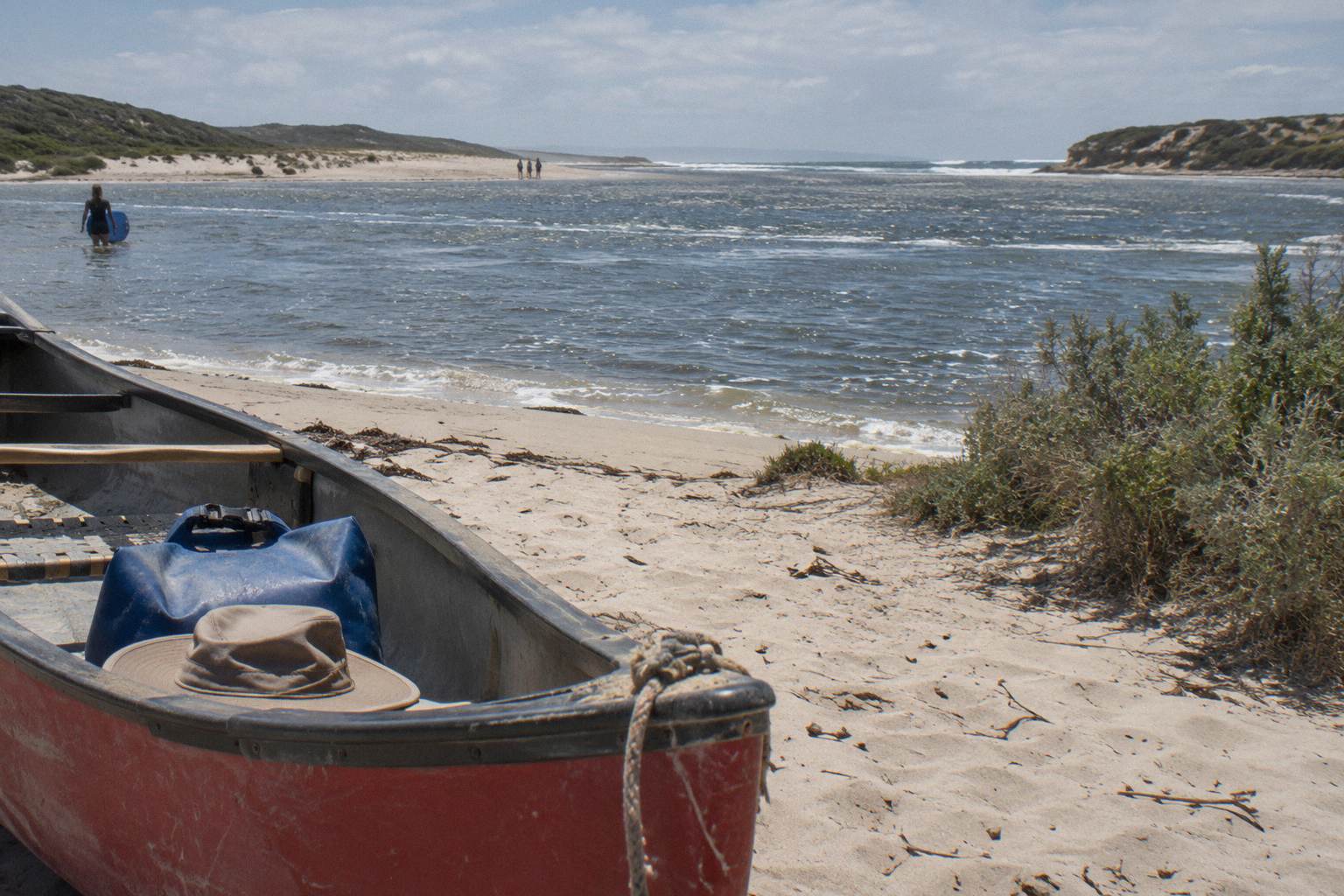
For a fuller checklist built from the same evidence base, the guide on what to wear and bring on a canoe paddle works through clothing, footwear and weather layering in detail. The short version for this question is that a towel and a spare set of clothes solve the swim question for free.
A note on seasons, without any water claims. Winter paddling is its own topic, and the deeper guide on paddling the river in winter rain and cold covers what changes when the July rainfall average sits at 194.1 mm. Nobody should read summer heat as a reason to assume swimming is on, either. The seasonal facts describe air temperature and river levels, not the product you are buying, and the trip you book is the product, not the weather around it.
Since the operator publishes no what-to-bring details, the gap is best closed at booking rather than at the water's edge. Two questions cover it: whether a supervised swim ever forms part of the trip, and what the launch and landing spots are like underfoot. Neither answer appears in the published material, and both change how you carry the swimwear and the wet-capable shoes, so asking takes a moment and settles the packing list before you leave home. If the answer on swimming is a flat no, the swimwear stays home and nothing else on the list changes.
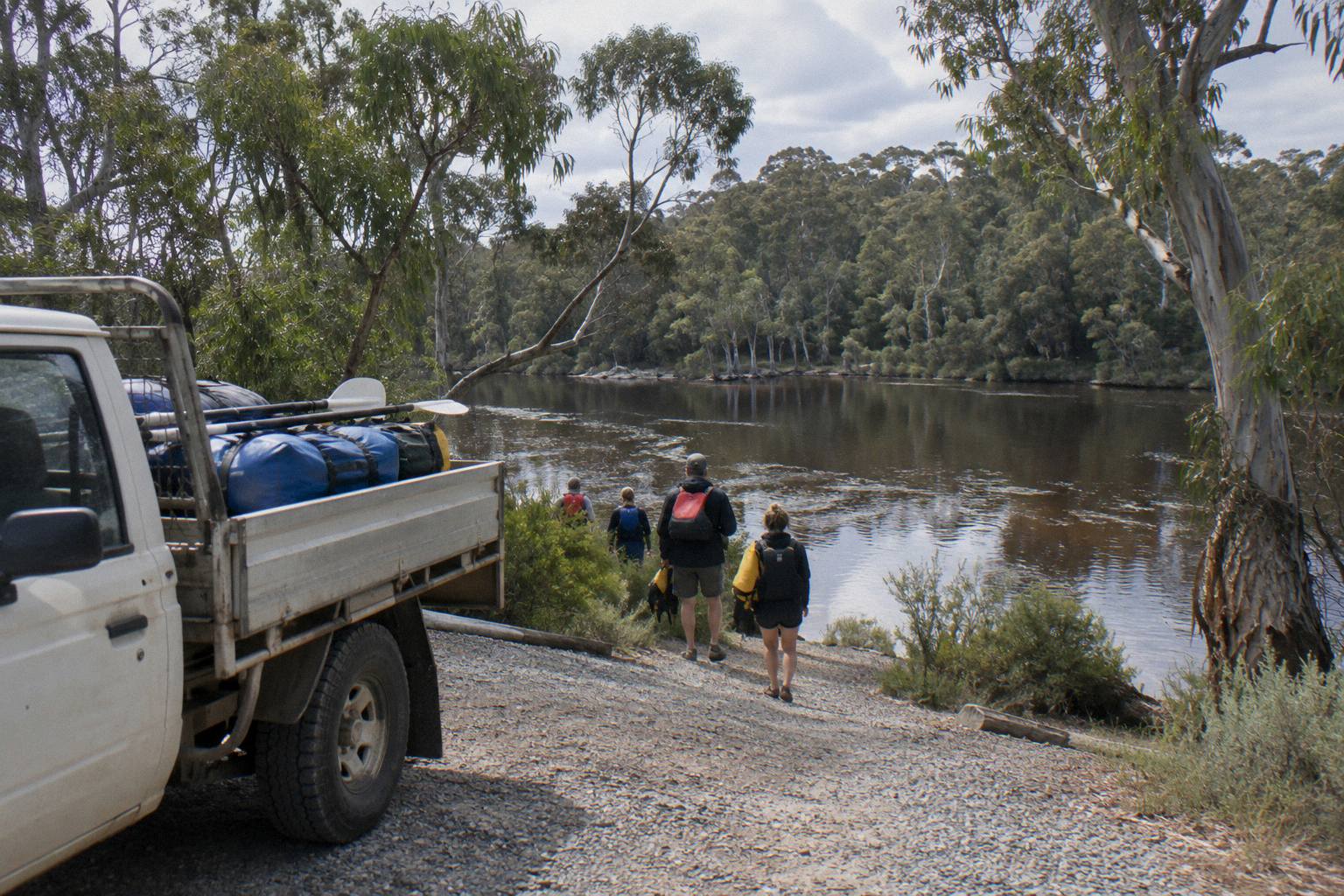
A four to four-and-a-half hour day in the same clothes argues for loose quick-drying fabrics over cotton, which holds the water from a splash instead of shedding it. The lunch stop on the bank is the natural moment to swap into the spare set, and that swap is what the dry bag is really for: it keeps the towel and change of clothes dry whatever the paddle itself does. Sun protection also does more work on a day this long, so a hat and a long-sleeved layer are easier to live with than one application of sunscreen at the start.
Who To Ask And Exactly What To Ask Them
Ask the operator directly, before booking, and put your questions in writing so the answer is in front of you on the day: whether swimming is possible on the trip, whether there is ever a stop where it is allowed, and what happens on very hot days. Both operators are reachable through live booking pages, and cancellation terms differ, so check the terms for the date you book rather than assuming one rule.
A short checklist of questions earns its keep here, because vague questions get vague answers. Ask these specifically.
| Question to ask | Why it matters |
|---|---|
| Is swimming permitted on this trip at all? | Establishes the rule, which no page publishes |
| Is there a stop where getting in the water is allowed? | Separates a swim stop from a lunch stop |
| What happens on an unusually hot day? | Reveals any heat-related flexibility the operator has |
| Do you need any swim ability to take part? | Confirms the unpublished suitability question |
| What is your policy if conditions change on the day? | Tells you how the operator handles the sandbar and weather |
Budget plays into the decision too, since both trips are paid products rather than casual hires. The Wild Food Canoe Lunch costs from A$150 per person and is rated 4.9 from 228 reviews, and the Canoe, 4x4 And Wine Day costs from A$248 per person and is rated 5.0 from 2,100+ reviews, the trip with the most reviews. Prices are in Australian dollars and both figures are from-prices, so a specific question about your own date is part of the same conversation as the swim question. If swimming is genuinely central to your day, say so when you ask, because a different product, such as a beach day at one of the coast's swimming beaches, may serve you better than either canoe trip.
The canoe lunch, described in more detail in the guide to the Bushtucker canoe paddle and wild food lunch, is the trip where the question matters most, since it spends the most time actually on the water. Its lunch includes 20 native tastings, with kangaroo, emu, crocodile and wild turkey on the operator's list, and vegetarians are catered for. Whether a swim ever joins that list is exactly the kind of thing a quick question settles.
On this question the documentation is genuinely empty. That is the whole answer, and asking the operator is the only way to improve it.
Common Questions About Swimming On A Margaret River Canoe Paddle
Can You Swim During A Canoe Paddle On The Margaret River?
No operator sets out a swimming rule, swim stop or ban, so the question remains open either way; ask the operator before you book. Ask the operator directly before booking, and pack as if you will stay dry.
Do You Need To Be Able To Swim To Take A Margaret River Canoe Tour?
No swimming ability requirement is published by either operator. The canoe lunch operator says the trip is "suitable for all ability levels", with canoes seating 2 to 5 and instruction provided, but that is the full published suitability information.
Is The Margaret River Calm Enough For Beginners?
A hire base describes its stretch as "more like a beautiful long lake with no strong river currents" for most of the year, and the tour operator states no motor craft are permitted on the river. The paddle runs upstream from the mouth, not out to sea.
Does The Margaret River Meet The Ocean Where The Paddle Starts?
The sandbar at the river mouth naturally opens and closes as flows, rainfall and ocean conditions change, per the Shire of Augusta Margaret River. No trip promises the mouth will be open on any given day, and visitors must not dig channels through the sandbar.
Is The Water Warm Enough To Swim In?
No official water temperature figure for the Margaret River could be verified, so no warmth or coldness claim can be made. Published climate data covers air temperature and rainfall only.
What Should I Pack If Swimming Is Unclear?
Pack quick-drying clothes, a towel, a change of clothes, sun protection, a dry bag and shoes that can get wet. Bring swimwear as an option rather than a plan, since nothing published says you will use it.